
Cyber Protection for Corporate Risks Becomes Critical in 2026, According to Industry Experts
MIAMI, FL — January 18, 2026 — As we move into the first quarter of 2026, the corporate world faces a sobering reality: cybersecurity is no longer an IT issue—it is the single most significant threat to business continuity, financial stability, and brand reputation. According to the Allianz Risk Barometer 2026, cyber incidents have ranked as the #1 global risk for five consecutive years, but the margin of concern has widened significantly this year.
Industry experts are sounding the alarm: the “AI-fication” of cybercrime, a deepening geopolitical divide, and the move toward stealthier, identity-centric attacks have made traditional defenses obsolete. In 2026, cyber protection isn’t just a line item in a budget; it is a critical pillar of corporate survival.
1. The 2026 Threat Landscape: From Ransomware to “Modern Extortion”
For years, ransomware was the primary boogeyman for CISOs (Chief Information Security Officers). While ransomware remains the leading cause of loss in many insurance portfolios, experts warn that its form has evolved. In 2026, we are seeing a fundamental shift from encryption-based attacks to data suppression and modern extortion.
The Rise of Stealthy “Log-In” Attacks
Adversaries are no longer “breaking in”; they are “logging in.” According to PwC’s 2026 Cybersecurity Outlook, attackers are increasingly bypassing traditional perimeters by exploiting legitimate credentials. Identity-centric operations are the new norm, with hackers using stolen or purchased session cookies to bypass multi-factor authentication (MFA).
Cyber-Enabled Fraud and Deepfakes
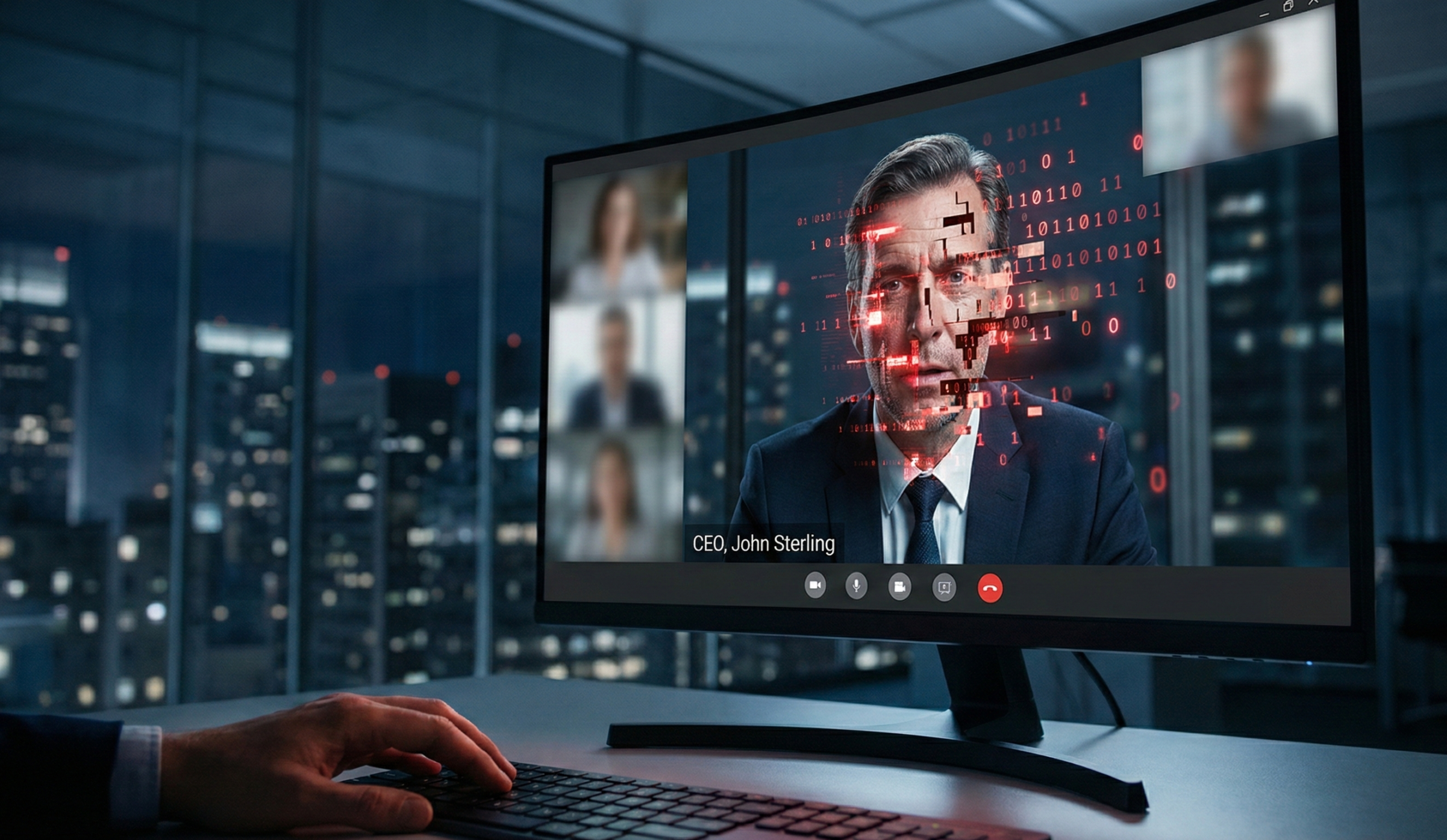
For CEOs, the top concern in 2026 has shifted from operational downtime to cyber-enabled fraud. The use of Generative AI (GenAI) to create hyper-realistic deepfakes has reached a tipping point. Businesses are reporting an influx of sophisticated “Business Email Compromise” (BEC) scams where AI-generated voice and video are used to trick employees into authorized multi-million dollar transfers.
2. Artificial Intelligence: The Great Force Multiplier
If there is one consensus among industry experts in 2026, it is that AI has fundamentally reshaped the arms race between attackers and defenders.
AI as a Catalyst for Attackers
AI is lowering the barrier to entry for low-level criminals while supercharging elite threat actors. Automated “personalized phishing” campaigns can now generate thousands of unique, grammatically perfect emails in seconds. Furthermore, malicious code can now adapt to its environment in real-time, sensing defenses and altering its behavior to avoid detection.
The Defensive Response
Conversely, 94% of security leaders identify AI as the most significant driver for defensive change. In 2026, companies are deploying “Agentic AI”—autonomous security agents that can isolate a compromised network segment, block suspicious traffic, and begin evidence collection in milliseconds—outpacing any human reaction time.
3. Deep Dive: The End of the “Hacker” (They Are Just Logging In)
For years, companies spent millions building digital “walls” (firewalls and antivirus). In 2026, those walls are useless because the enemy already has the keys.
- The Cookie Theft: Attackers use malware to steal an employee’s “session cookie” (the invisible file that keeps you logged into your email). With this cookie, the hacker bypasses your Multi-Factor Authentication (MFA) entirely.
- The Deepfake Trap: Generative AI is now creating hyper-realistic audio and video of executives. If your CFO gets a frantic voicemail from the “CEO” demanding an urgent wire transfer to a vendor, the human instinct is to obey.
- The Insight: The perimeter is dead. You cannot stop the breach; you can only control Identity (who is logging in) and Resilience (how fast you can isolate them).
4. The “Uninsurable” Checklist: What You Need in 2026
The cyber insurance market has matured into a dictatorship. Insurers are no longer accepting “we promise we are safe.” If your IT department cannot prove you have the following three pillars, your policy will be denied or canceled:
Phishing-Resistant MFA (PR-MFA): Text-message codes are dead. You must use hardware keys (like YubiKey) or FIDO2 biometrics for all privileged accounts.
EDR/MDR Everywhere: A basic antivirus is a red flag. You need Managed Detection and Response (MDR)—a 24/7 service that actively hunts for threats inside your network.
Immutable Backups: Your backups must be physically or logically locked so that even if a hacker gets “Admin” rights, they cannot delete or encrypt your safety net.
5. Third-Party and Supply Chain Governance: The Weakest Link
One of the most pressing trends identified by experts for 2026 is the “Shadow Agent” risk and the complexity of third-party ecosystems. As corporations outsource more to cloud providers and SaaS environments, their data lives in centralized platforms that are “honey pots” for attackers.
The “N-th Party” Risk
Industry experts emphasize that companies are now responsible for the security of their vendors’ vendors. A breach at a minor software provider can cascade into a catastrophic loss for a multinational giant. In 2026, Third-Party Risk Management (TPRM) has become a top three area of cyber spend, with companies using automated tools to continuously monitor the security posture of their entire supply chain.
6. Regulatory Compliance and Legal Litigation in 2026
The regulatory landscape in 2026 is a “patchwork quilt” of regional and sectoral laws that are becoming increasingly punitive.
The EU AI Act and Global Governance
By August 2026, the European Union’s AI Law will come into full force for high-risk systems. This directly impacts any U.S. company exporting to Europe or using AI in HR and critical infrastructure. Governance, Risk, and Compliance (GRC) are now the primary drivers of cyber investment for 31% of global executives.
The Litigation Wave
In the United States, litigation now follows most cyber incidents almost immediately—often within days of a breach. Companies in 2026 are finding themselves defending multiple legal fronts: regulatory fines, class-action lawsuits from customers, and even derivative lawsuits against directors for “failure to report” or “lack of oversight.”
7. The Skills Gap: Human Capital as a Vulnerability
Despite the rise of AI, the human element remains the most significant vulnerability. Experts at the World Economic Forum have noted a widening cybersecurity skills gap in 2026. Companies are struggling to find talent capable of managing the complex interaction between AI systems and human governance.
Fears of “deskilling” due to over-reliance on AI are real. Organizations are now investing heavily in “Red Team” testing and continuous training to ensure their human defenders can still think like hackers when the AI fails.
8. Final Verdict: Who Pays When AI Fools Us All?
The cyber insurance industry is doing what it must to survive the new wave of automated attacks, but the burden of flawless security is being placed entirely on the shoulders of corporate boards and their employees. The Big Question: If a worker is tricked into wiring millions by a flawless AI deepfake of their CEO, and the insurer denies the claim due to “human error,” who should be held legally responsible? Should the company absorb the devastating loss, or is the insurer acting in bad faith? Share your thoughts below.
About the Author