
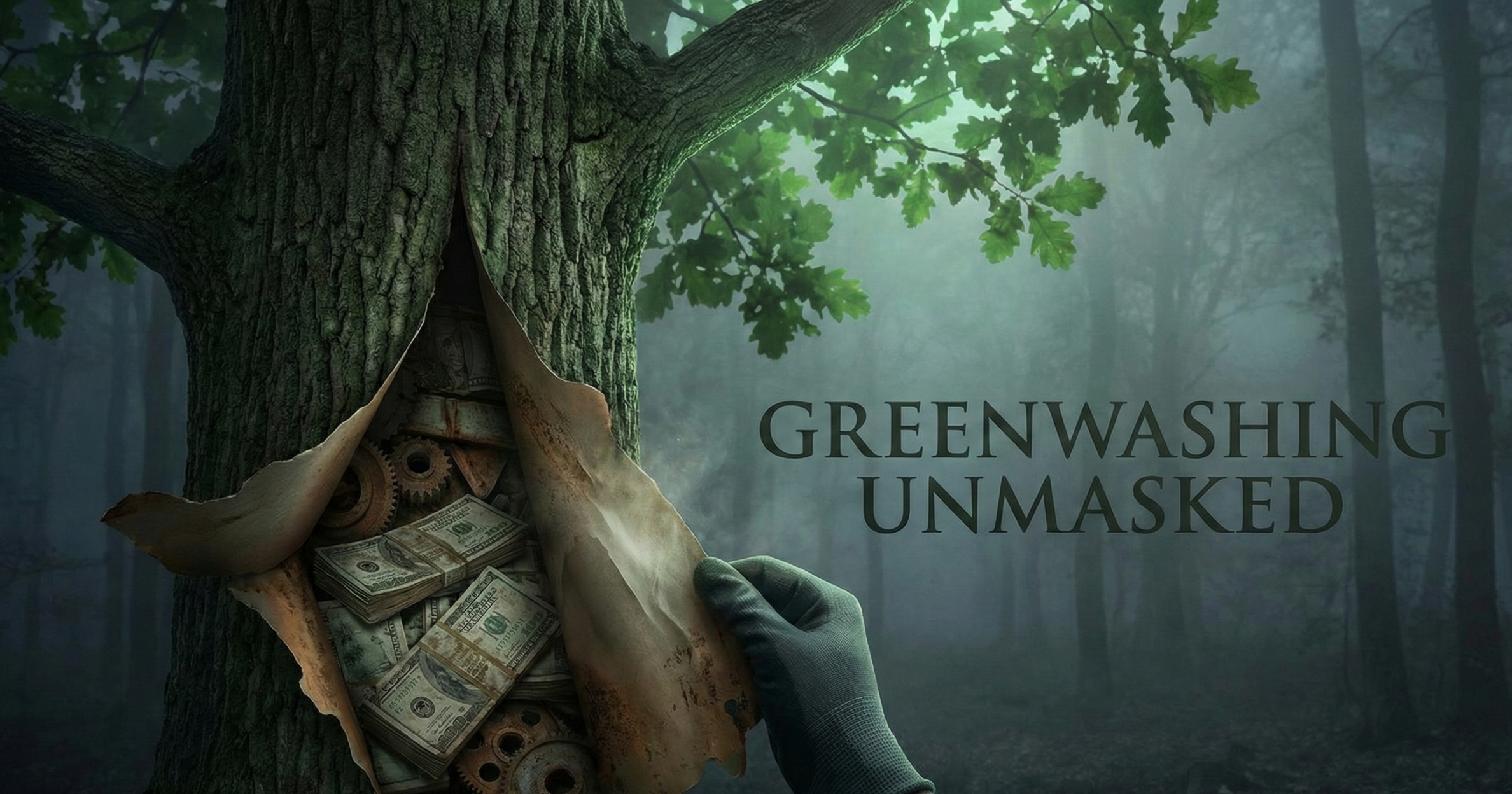
Serious Fraud Office Secures Convictions in £70 Million ‘Ethical Forestry’ Investment Scheme
In a landmark victory for financial regulation and investor protection, the Serious Fraud Office (SFO) has successfully secured convictions against the masterminds behind a £70 million “Ethical Forestry” investment scheme. The case, which has spanned years of complex international investigation, serves as a stark warning to the growing “green” investment sector and highlights the sophisticated methods used by modern fraudsters to exploit the global push for environmental sustainability.
The scheme, which marketed itself as a triple-bottom-line investment—promising high financial returns, social upliftment, and environmental preservation—turned out to be a meticulously architected sham. Thousands of retail investors, many of whom liquidated their life savings or pension pots, were left with nothing but empty promises of sustainable timber profits from plantations that were either non-existent or grossly overvalued.
1. The Architecture of the Deception
At its core, the Ethical Forestry scheme operated by selling individual “plots” of Melina trees in Central America. Investors were told that their capital would be used to manage sustainable plantations, and that as the trees matured, the harvest would yield significant returns.
The marketing was masterful. Using glossy brochures, celebrity endorsements, and “expert” appraisals, the directors created an aura of legitimacy. They capitalized on the ESG (Environmental, Social, and Governance) boom, positioning their product as a way for everyday people to combat climate change while securing their financial future.
The Breakdown of the £70 Million Fraud
The SFO investigation revealed that out of the £70 million raised from the public:
- Misappropriation of Funds: A vast majority of the capital was diverted into the personal bank accounts of the directors rather than being reinvested in the plantations.
- Hidden Commission Structures: Unbeknownst to investors, up to 50% of their initial investment was paid out as “commission” to unregulated sales agents who used high-pressure tactics to close deals.
- The Valuation Gap: Independent foresters later discovered that the land purchased was often unsuitable for high-yield timber, and the “projected growth” figures presented to investors were scientifically impossible.
2. Anatomy of a Scam: Weaponizing “Good Intentions”
The genius—and cruelty—of the Ethical Forestry scheme was not in the financial complexity, but in the emotional manipulation. The fraudsters exploited a blind spot in the modern investor’s psyche: The desire to do good.
- The “Halo Effect”: By wrapping the investment in eco-friendly jargon (“carbon capture,” “sustainability”), the directors lowered the victims’ guard. Investors asked fewer questions because they wanted the story to be true.
- The Commission Heist: While investors thought their money was planting trees, up to 50% was immediately siphoned off to pay aggressive sales agents. This is a classic Ponzi mechanic: using new money to pay the salespeople who bring in more new money.
3. The SFO’s “Follow the Money” Strategy
The successful prosecution was the result of a multi-jurisdictional effort. Because the funds were moved through a web of offshore shell companies—ranging from the Cayman Islands to Luxembourg—the SFO had to utilize its Section 2 powers to compel testimony and access encrypted financial data.
Director of the SFO, in a statement following the verdict, noted:
“This was a calculated, cold-blooded raid on the retirements of hard-working people. By dressing up greed as ‘environmental ethics,’ these individuals didn’t just steal money; they stole the public’s trust in sustainable investing.”
The investigation also highlighted the role of “Shadow Directors”—individuals who controlled the company’s operations from behind the scenes while keeping their names off official filings to avoid legal scrutiny. Through digital forensics and recovered emails, the SFO was able to link these individuals directly to the fraudulent marketing materials.
4. Impact on the Insurance and Pension Sectors
The fallout from the Ethical Forestry conviction extends far beyond the courtroom. It has sent shockwaves through the Pension and Life Insurance industries, particularly regarding Self-Invested Personal Pensions (SIPPs).
The Burden on the FSCS
Since many of the investors were advised by regulated financial firms that have since gone insolvent, the Financial Services Compensation Scheme (FSCS) has been tasked with picking up the bill. This massive payout puts upward pressure on the levies paid by healthy insurance and financial firms, effectively forcing the rest of the industry to subsidize the losses caused by fraudsters.
Professional Indemnity (PI) Insurance Crisis
For brokers and financial advisors, the “Ethical Forestry” debacle has made securing Professional Indemnity (PI) insurance significantly more difficult. Insurers are now applying “environmental risk” exclusions or drastically increasing premiums for firms that offer alternative or unregulated investment products.
Heightened Due Diligence Requirements
Insurers providing D&O (Directors and Officers) coverage are now requiring much more granular data on “Green” claims. The conviction proves that “Greenwashing” isn’t just a marketing faux pas—it can be a criminal enterprise.
5. Greenwashing: The New Frontier for Fraud
The “Ethical Forestry” case is being cited by legal experts as a textbook example of predatory greenwashing. As the global economy transitions to net-zero, trillions of dollars are flowing into environmental projects. This creates a “gold rush” environment where oversight can sometimes lag behind capital flow.
The SFO has indicated that this is only the first of several investigations into “alternative” green assets, including carbon credit scams, fraudulent hydrogen energy startups, and “sustainable” real estate developments.
Investor Toolkit: How to Spot “Greenwashing” Fraud
The conviction is a victory, but the money is gone. To protect your pension from the next “Ethical Forestry,” apply these three checks before investing in any ESG product:
- Demand the Audit: Never trust a glossy brochure. Ask for a third-party biological asset audit. If the company cannot produce a recent report from a reputable firm verifying the crops actually exist, run away.
- The “Guaranteed” Red Flag: In agriculture and forestry, nothing is guaranteed. Weather, pests, and fire are real risks. If a brochure promises “Guaranteed Double-Digit Returns,” it is likely a scam.
- Check the Regulation: Many of these schemes are structured as “unregulated collective investment schemes” (UCIS). If the product isn’t regulated by the FCA (or your local authority), you have zero protection if it collapses.
6. The Human Cost: A Trail of Broken Retirements
While the legal victory is significant, the human cost remains devastating. Many victims were nearing retirement and lost their entire nest eggs. Testimonies during the trial painted a grim picture of families losing their homes and individuals suffering from severe mental health crises due to the financial strain.
The SFO’s Proceeds of Crime (PoC) team is now working to claw back assets hidden by the defendants. This includes luxury real estate, high-end vehicles, and hidden crypto-wallets. However, experts warn that recovering the full £70 million is unlikely, as much of it was spent on the directors’ lavish lifestyles or lost in further high-risk gambling.
7. Final Verdict: The Cost of Justice
While the SFO deserves praise for untangling this international web, the damage goes beyond the victims. The Financial Services Compensation Scheme (FSCS)—funded by honest financial firms—often picks up the tab for these disasters. This means every law-abiding financial advisor pays higher levies, and ultimately, clients pay higher fees. Community Question: Do you think regulators like the FCA need stronger powers to shut down “unregulated” green investments before they collapse? Or is it up to the investor to do their homework? Share your thoughts below.
About the Author