U.S. House Judiciary Subpoenas Major Health Insurers Over Massive ACA Fraud Allegations in 2026
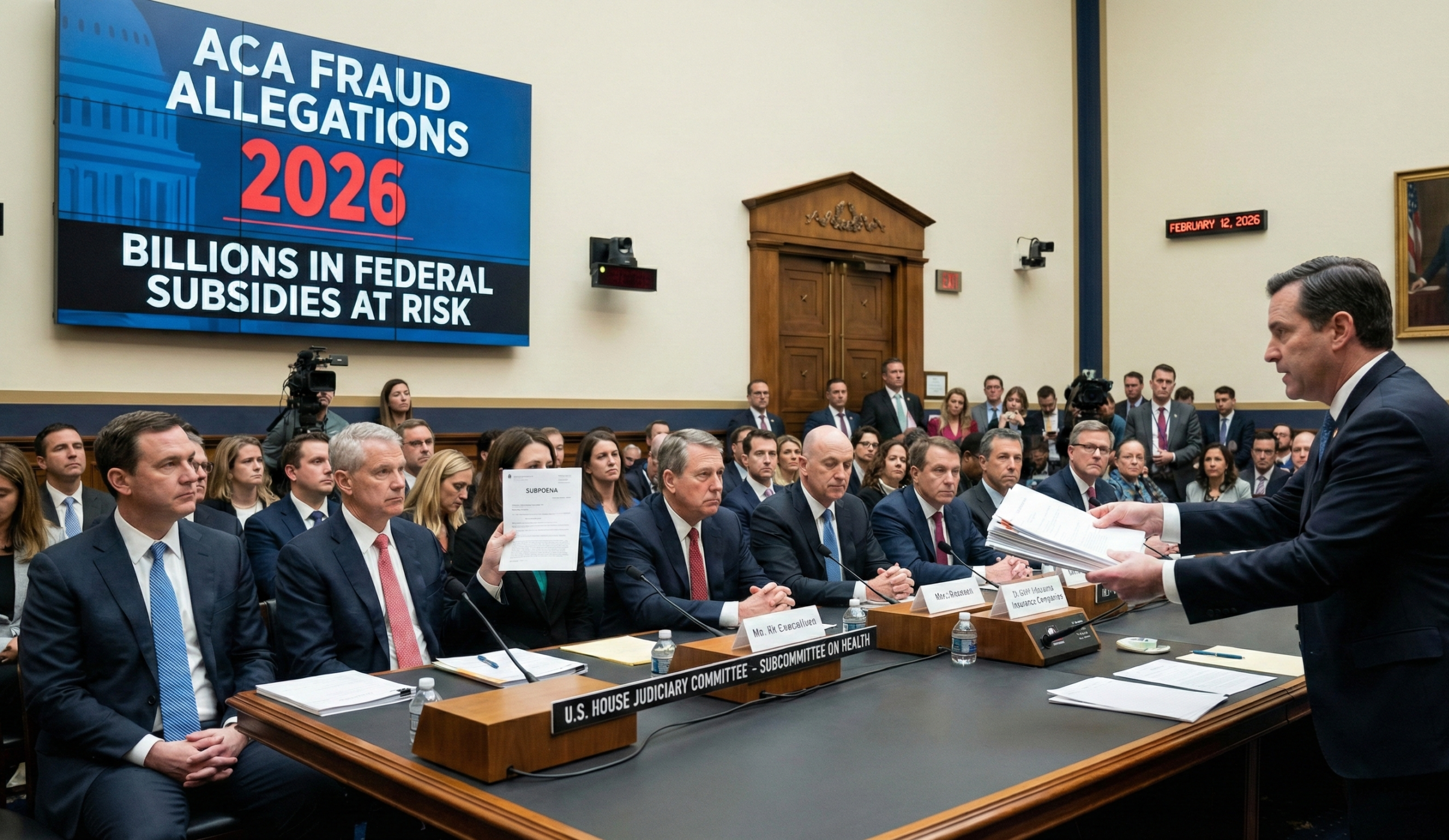
The scrutiny over the federal health insurance marketplace has reached a fever pitch. In a dramatic escalation of oversight, the U.S. House Judiciary Committee has issued a series of subpoenas to eight of the nation’s largest health insurers. The move, finalized in early February 2026, demands internal documents, risk assessments, and communications regarding the companies’ efforts—or alleged lack thereof—to prevent widespread enrollment fraud that investigators believe is siphoning billions of dollars in federal subsidies.
This legislative offensive marks a critical turning point for the health insurance sector. As the government grapples with rising healthcare costs and fiscal accountability, the focus has shifted toward the “integrity” of the Affordable Care Act (ACA) marketplace, putting insurers in the direct line of fire for their role as gatekeepers of federal funds.
1. The Core of the Investigation: A Multi-Billion Dollar Leak
The subpoenas come in the wake of a bombshell federal report suggesting that fraudulent actors have been systematically exploiting loopholes in the ACA’s digital enrollment platforms. Investigators allege that thousands—and potentially millions—of individuals were enrolled in plans without their knowledge, or with falsified income data, to trigger maximum federal premium tax credits.
The Scale of the Fraud
While the total loss is still being calculated, initial estimates from the Government Accountability Office (GAO) and independent watchdogs suggest that fraudulent activity in 2025 and early 2026 could account for up to 5% of total marketplace spending. For insurers, the risk is twofold: a catastrophic loss of trust from federal regulators and the potential for massive False Claims Act (FCA) litigation and clawbacks of payments deemed to be based on fraudulent enrollments.
2. Who is Under the Microscope?
The House Judiciary Committee has targeted a “Who’s Who” of the American insurance world. The list of subpoenaed companies includes industry titans such as UnitedHealthcare, Elevance Health, CVS Health (Aetna), Centene, and Molina Healthcare, among others.
What the Committee Demands
The subpoenas are specifically hunting for evidence of “willful blindness” or systemic failures in anti-fraud protocols. The Committee is demanding:
- Internal Audit Reports: Documents that flag suspicious surges in enrollment via specific third-party agents.
- Communications with Web-Based Brokers: Detailed records of partnerships with digital platforms that may have facilitated high volumes of “ghost” enrollments.
- Fraud Detection Investments: A breakdown of how much insurers have invested in identity verification (IDV) versus their marketing and acquisition budgets.
3. Deep Dive: Anatomy of a “Ghost Enrollment”
How do you steal billions from the ACA? You exploit the “Zero-Friction” system.
- The Data Harvest: Rogue brokers buy lists of names and Social Security numbers on the black market.
- The Switch: They enroll these people in $0 premium ACA plans (often switching them out of their existing plans without consent) to collect the monthly commission fees.
- The “Willful Blindness”: The accusation is that insurers saw thousands of enrollments coming from a single IP address or broker ID but didn’t stop it because it boosted their membership numbers and revenue.
4. The Insurers’ Defense: Victims or Enablers?
The insurance industry finds itself in a defensive crouch. Traditionally, insurers have argued that they are victims of these schemes, as fraudulent enrollments lead to higher administrative costs and skewed risk pools that hurt overall profitability.
Industry Insights: A spokesperson for the Blue Cross Blue Shield Association recently emphasized that insurers have been “sounding the alarm” about enrollment vulnerabilities for years. The defense centers on the premise that the federal government’s push for “low-friction” enrollment to increase coverage numbers has inherently weakened security protocols, leaving the door open for sophisticated bad actors.
5. The Litigation Ripple Effect: Beyond Congress
The Congressional investigation is merely the first domino to fall. In the high-stakes world of Risk, Litigation & Fraud, where there is a subpoena, a wave of legal action usually follows.
- Shareholder Derivative Suits: Investors are already filing “duty of oversight” claims against boards of directors, alleging that the failure to implement robust fraud controls has exposed the companies to massive regulatory fines and reputational damage.
- State Attorney General Actions: State-level regulators in Florida, Texas, and Georgia—states with historically high ACA enrollment—have launched parallel investigations into “predatory” enrollment agencies operating within their borders.
- Qui Tam Lawsuits: Insider whistleblowers are increasingly coming forward, filing lawsuits under the False Claims Act in hopes of sharing in the potential multi-billion dollar recoveries.
6. Taxpayer Alert: Are You a Victim?
This fraud doesn’t just hurt the government; it hurts you. If a scammer enrolled you in a fake plan, you could face a massive tax bill from the IRS for “improper subsidies.” Check Your Status Now:
- Watch for Form 1095-A: If you receive this tax form for a health plan you never signed up for, do not ignore it. It means someone is using your identity.
- Check Healthcare.gov: Log in and verify that your current plan hasn’t been switched by a rogue broker without your permission.
- Report It: If you find a ghost policy, file a complaint with the CMS Marketplace Call Center immediately to avoid tax penalties.
7. Final Verdict: Victims or Accomplices?
Insurers claim they are victims of bad brokers. Congress claims insurers are silent partners in the crime. The Big Question: Do you believe insurance giants like UnitedHealthcare didn’t notice millions of dollars in suspicious enrollments? Or did they turn a blind eye to boost their stock price? Share your opinion below.
About the Author