
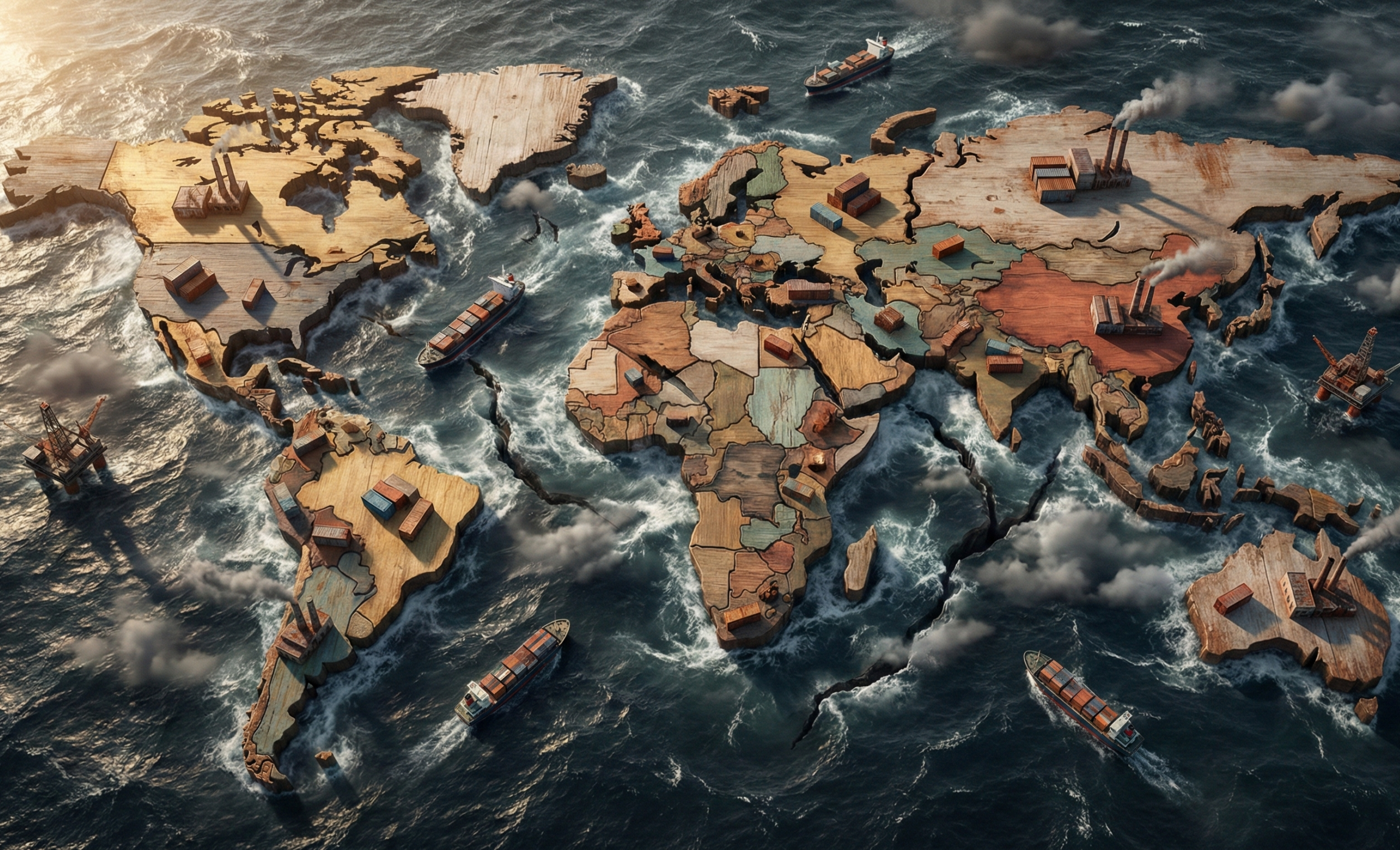
Global Trade Fragmentation to Drive Up Costs and Impact Insurance Coverage, Says Swiss Re Institute
The era of seamless global integration is undergoing a profound transformation. According to a recent comprehensive analysis by the Swiss Re Institute (https://www.swissre.com/institute/research/sigma-research.html), the world is shifting away from the hyper-globalization of the early 21st century toward a state of global trade fragmentation. This shift, driven by geopolitical tensions, national security concerns, and a desire for supply chain resilience, is poised to fundamentally alter the risk landscape, driving up costs for businesses and complicating the provision of insurance coverage worldwide.
1. The End of the “Just-in-Time” Era
For decades, the global economy operated on the principle of efficiency. Supply chains were designed to be “just-in-time,” sourcing components from wherever they were cheapest and most efficient to produce. However, the COVID-19 pandemic, followed by escalating trade disputes and regional conflicts, exposed the fragility of this model.
The Swiss Re Institute highlights that we are now entering an era of “just-in-case” economics. Nations are increasingly prioritizing “friend-shoring”—trading primarily with political allies—and “near-shoring”—bringing production closer to home. While these strategies enhance resilience, they come with a significant price tag.
Why Fragmentation Leads to Higher Costs
The move toward fragmented trade is inherently inflationary. When companies move production away from low-cost hubs to more expensive domestic or allied markets, several cost drivers come into play:
- Increased Capital Expenditure (CapEx): Rebuilding manufacturing plants and infrastructure in new regions requires massive investment.
- Higher Labor Costs: Shifting production to developed economies often means paying significantly higher wages than in traditional manufacturing hubs.
- Inefficiency and Redundancy: Maintaining multiple supply sources and higher inventory levels (the “buffer” against disruption) ties up capital that could be used elsewhere.
For the insurance industry, these rising costs translate directly into higher insured values. As the cost of rebuilding a factory or replacing specialized machinery increases, so too does the potential payout in the event of a claim, leading to upward pressure on premiums.
2. Deep Dive: Why “Friend-Shoring” is Inflationary
We all want resilient supply chains, but resilience has a price tag.
- The CapEx Trap: Rebuilding a manufacturing plant in a “friendly” nation requires massive capital. Higher asset values = Higher Insurance Premiums.
- The Wage Gap: Shifting production from low-cost hubs to developed economies means paying higher wages. This increases the cost of Business Interruption claims.
- The Route Change: Avoiding geopolitical “choke points” (like the Red Sea or South China Sea) means longer shipping routes.
This fragmentation creates a “Higher-Floor Inflation.” Costs won’t go back down to 2019 levels because the underlying structure of trade has become more expensive to insure and operate.
3. Impact on Insurance Coverage: A Narrowing Scope?
The Swiss Re Institute warns that trade fragmentation doesn’t just make insurance more expensive; it makes it more complex to underwrite. The “protection gap”—the difference between total economic losses and insured losses—could widen if the industry does not adapt to these new realities.
Supply Chain Complexity and Contingent Business Interruption (CBI)
In a fragmented world, supply chains may become shorter but more opaque. Contingent Business Interruption (CBI) insurance, which covers losses resulting from disruptions at a supplier’s or customer’s facility, becomes harder to price. If a critical component is sourced from a “friend-shored” country that suddenly experiences a localized crisis, the ripple effects can be unpredictable.
Insurers may become more selective about the risks they are willing to take, requiring much higher levels of data transparency from their clients regarding their Tier 2 and Tier 3 suppliers.
Marine and Cargo Risks
Global trade fragmentation often involves changing trade routes. Shifting away from established maritime paths to avoid geopolitical “choke points” can lead to:
- Longer transit times: Increasing the exposure window for cargo.
- New environmental hazards: Using less-traveled routes might expose vessels to harsher weather conditions or inadequate port infrastructure.
- Political Risk: The threat of seizures, sanctions, or local conflicts becomes a more prominent factor in marine underwriting.
4. The Role of Protectionism and Regulatory Hurdles
As nations turn inward, protectionist policies are on the rise. This includes tariffs, export controls, and stricter regulations on foreign investment. For global insurers, this creates a fragmented regulatory environment.
Operating across multiple jurisdictions with differing standards increases administrative costs. Furthermore, if a country imposes restrictions on foreign insurers to protect its domestic market, multinational corporations may find it difficult to secure consistent, global “master policies” for their operations. This “de-globalization” of the insurance market itself could leave some regional subsidiaries underinsured.
5. The COO Playbook: How to Insure a Fragmented World
Standard property insurance isn’t enough when governments are the problem. You need to look at specialized products.
Political Risk Insurance (PRI): This is no longer just for oil companies. If you rely on a foreign supplier, PRI covers you against government expropriation, license cancellation, or currency inconvertibility.
Map Your “Tier 2” Suppliers: Insurers are demanding data transparency. You know your supplier, but do you know their supplier? If you can’t map it, you likely can’t insure it against Contingent Business Interruption (CBI).
6. Economic Outlook: A Higher-Floor Inflationary Environment
The Swiss Re Institute’s report suggests that the “peace dividend” of the post-Cold War era has evaporated. We are likely entering a period of structurally higher inflation. For the insurance sector, this means:
- Claims Inflation: The cost of materials and labor for repairs will remain high.
- Social Inflation: In many regions, trade fragmentation is accompanied by social unrest, leading to higher litigation costs and larger jury awards in liability cases.
- Interest Rate Volatility: Central banks will continue to struggle with balancing growth against fragmentation-induced inflation, affecting insurers’ investment portfolios.
7. Final Verdict: The End of Cheap Goods?
Global trade fragmentation is a fundamental reordering of the world economy. It brings national security, but it kills efficiency. The Big Question: Are you willing to pay 20% more for products (and insurance) if it means your supply chain is secure from geopolitical rivals? Or do we need to go back to global integration to keep inflation down? Share your view below.
About the Author