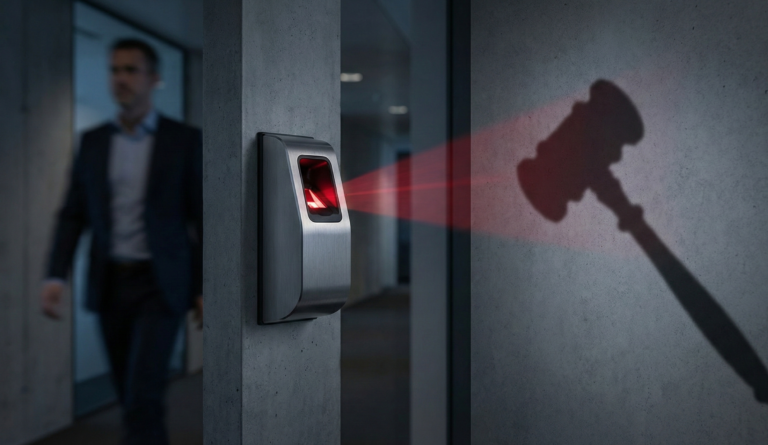
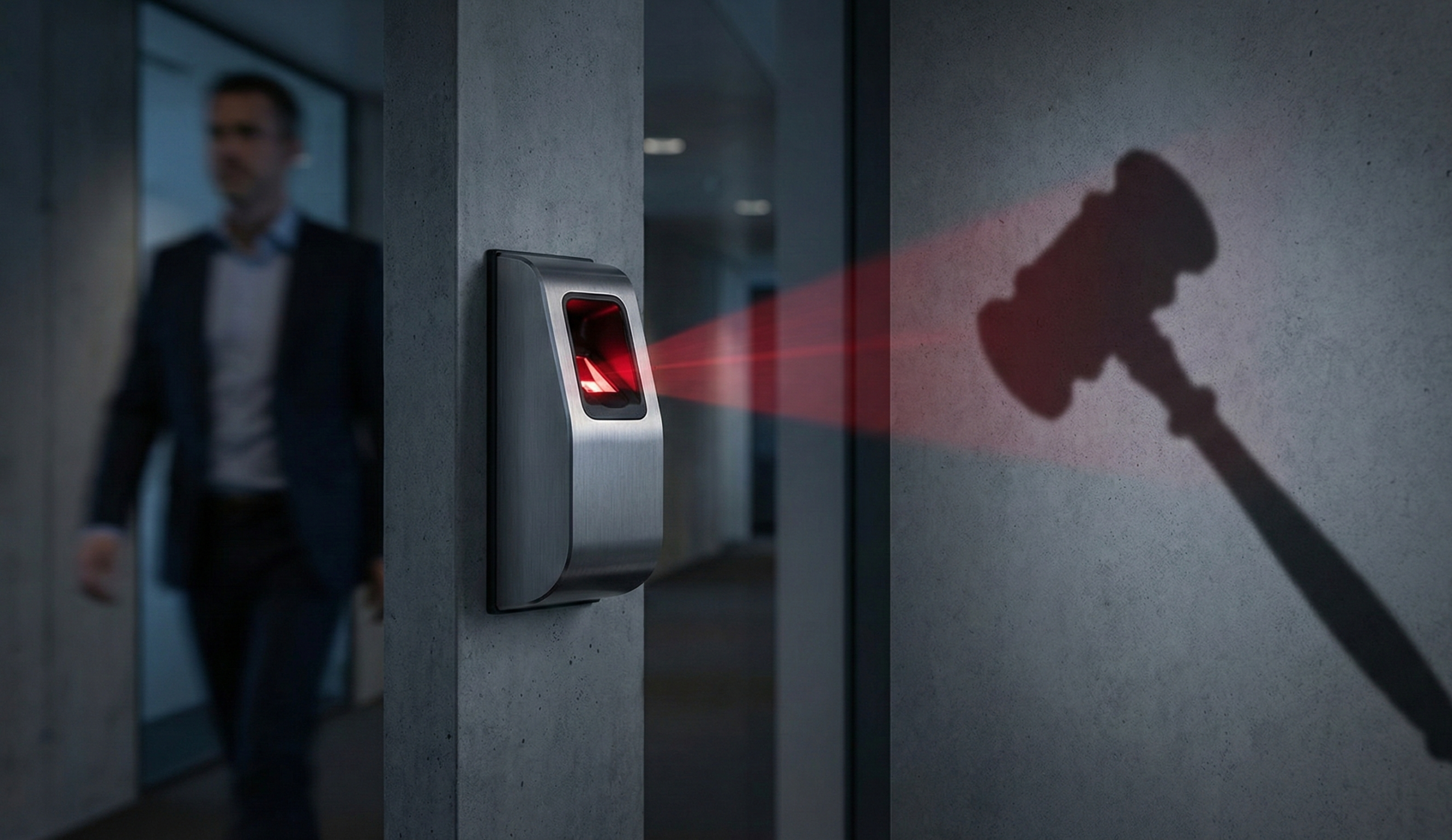
Meta Agrees to Historic $1.4 Billion Settlement with Texas Over Biometric Privacy, Setting New Liability Benchmark for 2026
In a landmark decision that is sending shockwaves through corporate boardrooms and underwriting departments alike, Meta Platforms Inc. (formerly Facebook) has finalized a $1.4 billion payment to the State of Texas to settle allegations regarding the unauthorized capture and use of biometric data.
Announced officially this week in February 2026, this settlement is the largest ever obtained by a single state attorney general for a privacy violation. For the insurance industry—specifically within the Cyber Liability, General Liability (GL), and Directors & Officers (D&O) sectors—this payout is not just a headline; it is a seismic event. It confirms that biometric privacy litigation has evolved from a niche regulatory risk into a catastrophic liability exposure that can pierce even the deepest corporate pockets.
This agreement ends a multi-year legal battle over Texas’s Capture or Use of Biometric Identifier (CUBI) Act, but for risk managers, the battle is just beginning. The sheer magnitude of the settlement sets a new “floor” for privacy litigation, signaling that the era of “Social Inflation” in digital rights has arrived.
1. The Anatomy of the Case: CUBI vs. Big Tech
To understand the insurance implications, one must understand the legal mechanism. The lawsuit, originally filed by Texas Attorney General Ken Paxton, centered on Meta’s now-discontinued “Tag Suggestions” feature. The state alleged that for over a decade, the social media giant used facial recognition technology to capture the biometric geometry of millions of Texans without their informed consent.
A New Precedent for State Power
Unlike the famous $650 million Illinois BIPA settlement of 2021, which was a class-action suit brought by private citizens, this case was brought by the State of Texas.
- The “Per Violation” Math: The CUBI Act allows for civil penalties of up to $25,000 per violation.
- The Aggregation Risk: The settlement effectively validates the state’s argument that every single time a user’s face was scanned without consent, a violation occurred. For insurers, this “stacking” of penalties is the nightmare scenario for aggregation modeling.
This victory establishes that state-level privacy laws have “teeth” capable of inflicting multi-billion dollar damages, independent of federal regulation.
2. The “Occurrence” Debate: A Nightmare for Actuaries
The most terrifying aspect of this settlement for the insurance industry is the validation of the “Continuous Trigger” theory.
In General Liability and Cyber policies, coverage is often limited “per occurrence.” Insurers have long argued that a company’s decision to use a specific technology (like facial recognition) constitutes a single occurrence, regardless of how many people it affects.
However, the $1.4 billion figure suggests a rejection of that logic. If courts and regulators view each face scan as a separate “occurrence,” policy limits are exhausted instantly.
- 2026 Underwriting Shift: In response, major carriers like Chubb, AIG, and Travelers are expected to tighten their policy wording in Q2 2026. We anticipate a surge in “Batch Clauses”—language that explicitly groups all privacy violations arising from a single piece of software into one claim limit to protect the insurer’s solvency.
3. Deep Dive: The Math That Kills Companies
Why is the settlement so high? Because of “Per Violation” Stacking.
- The Law: Laws like Texas’ CUBI or Illinois’ BIPA don’t require you to steal identity. The act of scanning without consent is the crime.
- The Calculation: * Penalty: Up to $25,000 per violation.
- Scenario: You scan 100 employees’ faces every day for a year.
- Total Risk: It’s not $25,000 total. It creates an aggregate liability that can reach millions in days.
This is why insurers are panicking. A single “Time Clock” software can exhaust a $10 Million policy limit in a week.
4. Social Inflation: Privacy is the New Asbestos
This settlement is a prime example of Social Inflation—the trend of rising claims costs due to increased litigation, broader definitions of liability, and aggressive plaintiff tactics.
For decades, asbestos was the “long-tail” risk that haunted insurers. In 2026, Biometric Data has taken that mantle.
- Emboldened Plaintiffs: The plaintiff bar now views biometric laws as a gold mine. We are seeing a pivot from “Data Breach” lawsuits (where hackers steal data) to “Data Collection” lawsuits (where the company itself collected data improperly).
- No “Harm” Required: Crucially, under laws like CUBI and BIPA, plaintiffs do not need to prove they suffered financial identity theft. The mere act of collecting the data without a written release is the harm. This lowers the bar for litigation significantly.
5. The Coverage Crisis: “Silent Cyber” and GL Exclusions
The Meta settlement highlights the danger of “Silent Cyber”—where cyber-related risks leak into non-cyber policies.
Historically, companies attempted to claim defense costs for privacy suits under their Commercial General Liability (CGL) policies, citing “Personal and Advertising Injury.” Insurers have fought this aggressively.
The 2026 Exclusion Wave
Following this $1.4 billion payout, the market is hardening:
- Absolute Exclusions: CGL policies renewing in 2026 are increasingly containing “Absolute Biometric Privacy Exclusions,” forcing policyholders to seek affirmative coverage elsewhere.
- The Cyber Gap: Standard Cyber Liability policies often cover “Network Security” (hacks) but may have sub-limits for “Regulatory Fines” or “Wrongful Collection.” Brokers must now carefully review whether a client’s cyber policy actually covers the collection of data, not just the loss of it.
6. The “Silent Cyber” Audit: Are You Exposed?
Don’t assume your current Cyber or GL policy covers this. Following the Meta ruling, underwriters are adding specific exclusions.
Your Action Plan:
Check the “Exclusions” Page: Look for terms like “Biometric Information Privacy Act” or “Confidential Information Exclusion.”
The “Retro” Audit: Even if you stop using the scanners today, you are liable for past data. You must delete legacy face/fingerprint data securely and document the destruction.
Get “Affirmative” Coverage: Ask your broker for a standalone policy that explicitly covers “Wrongful Collection,” not just “Data Breach.”
6. Corporate Governance: The D&O Fallout
This case is also a governance failure, placing Directors & Officers (D&O) insurance in the crosshairs.
Shareholders are increasingly filing derivative suits against boards that fail to oversee privacy compliance. The argument is simple: “The Board knew we were using facial recognition. Why didn’t they ensure we complied with Texas law? Their negligence cost us $1.4 billion.”
The 2026 D&O Question: Underwriters are now adding specific questions to D&O applications:
- Does the Board have a specialized Privacy Committee?
- Has the company conducted a forensic audit of legacy biometric data? If the answer is no, premiums are increasing by upwards of 15-20% for tech-adjacent firms.
7. Final Verdict: Is Convenience Worth the Risk?
Biometrics make life easier. Unlocking doors with your face is faster than a key card. But in 2026, that convenience comes with a billion-dollar price tag. The Big Question: Would you ban biometric technology in your company to avoid lawsuits, or is the security benefit worth the insurance cost? Share your strategy below.
About the Author