
Third-Party Litigation Funding Faces Global Regulatory Crackdown as ‘Social Inflation’ Hits Liability Limits
The landscape of global litigation is undergoing a seismic shift. For decades, the courtroom was a venue where plaintiffs and defendants settled disputes based on the merits of a case and the established parameters of law. However, the meteoric rise of Third-Party Litigation Funding (TPLF)—a multi-billion dollar industry where hedge funds and private investors finance lawsuits in exchange for a cut of the settlement—has transformed the legal arena into a high-stakes asset class.
According to recent industry data and legal watchdogs, the unchecked growth of TPLF is a primary driver of “Social Inflation.” This phenomenon refers to the rising costs of insurance claims resulting from societal trends, such as increased litigation, broader jury awards, and aggressive legal tactics. As 2026 unfolds, regulators across the United States, the European Union, and Australia are moving toward a coordinated “crackdown” to bring transparency to this opaque corner of the financial world.
1. The Mechanics of an Invisible Engine
To understand the regulatory urgency, one must first understand how TPLF operates. Unlike traditional legal financing, where a client pays an hourly rate or a contingency fee to a lawyer, TPLF introduces a third player: the investor. These funders often remain anonymous, hidden from the court and the defendant.
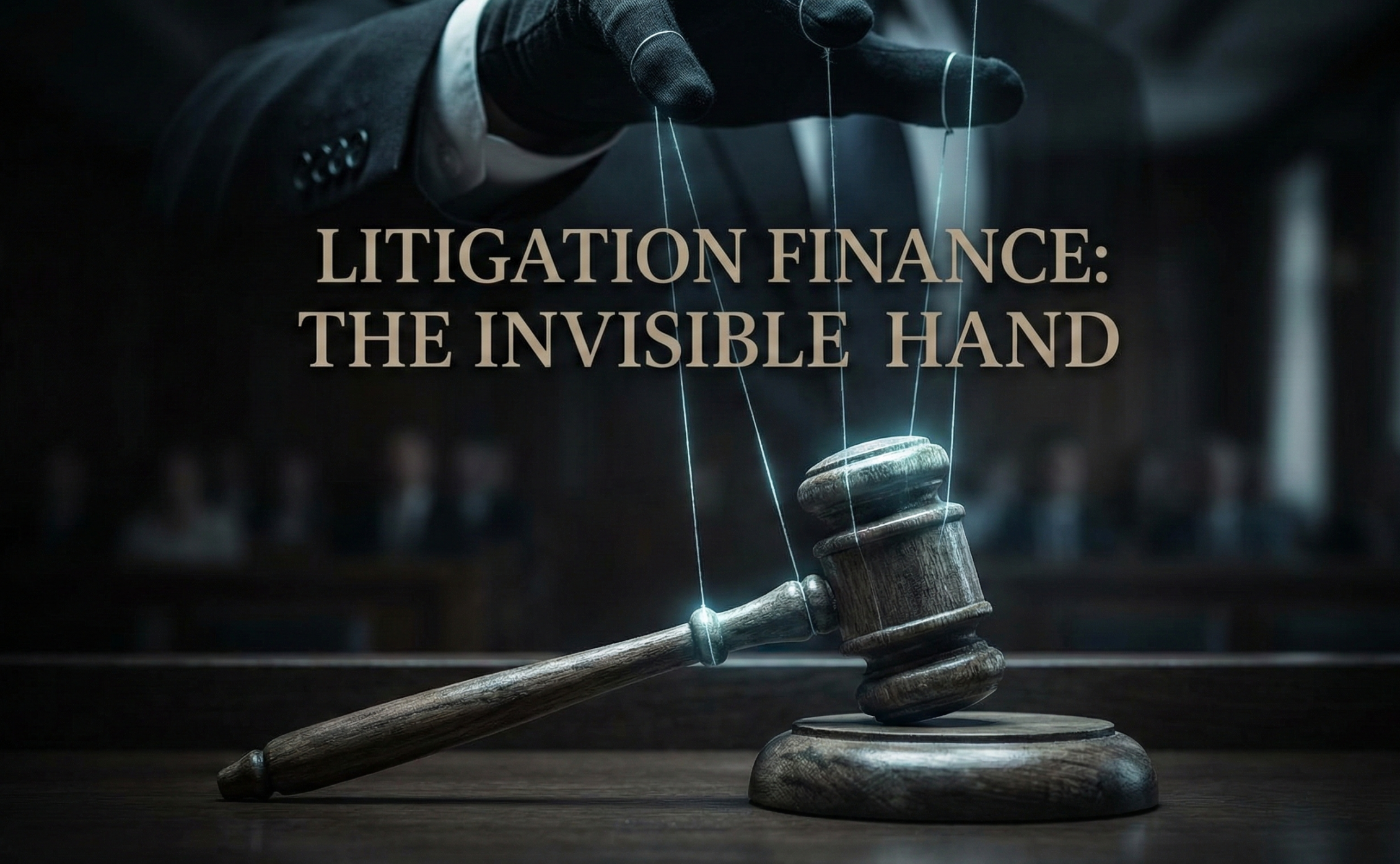
This “invisible hand” creates several friction points within the justice system:
- Decoupling of Interest: When a funder controls the purse strings, the goal often shifts from seeking justice for the plaintiff to maximizing the Return on Investment (ROI) for the funder.
- Prolonged Litigation: Funders may discourage early settlements that are fair to the plaintiff but do not meet the funder’s internal profit hurdles.
- Inflated Damage Demands: To ensure a profit after the funder takes their 30-40% cut, legal teams are incentivized to push for “nuclear verdicts”—awards that exceed $10 million—well beyond historical norms.
2. Deep Dive: From Justice to “Asset Class”
To understand why regulators are panicked, we must look at how TPLF has evolved. It is no longer just about helping a poor plaintiff fight a giant corporation. The “Portfolio” Pivot: In 2026, funders are moving away from financing single cases (too risky) to “Portfolio Funding.” They give a law firm $50 million to finance all their cases.
- The Risk: This obscures the funding even more. Since the money isn’t tied to a specific case docket, it becomes nearly impossible for a judge to know a hedge fund is pulling the strings.
- The Algo-Driver: Funders use AI to predict which judges and juries are most likely to award massive payouts, effectively “shopping” for the most profitable courts.
3. The “Social Inflation” Spiral
The Swiss Re Institute and other major global reinsurers have sounded the alarm on how TPLF feeds the social inflation spiral. As jury awards grow, they set new benchmarks for “reasonable” settlements. This creates a feedback loop: higher awards lead to higher expectations, which lead to more litigation, which ultimately forces insurers to raise premiums or exit certain markets altogether.
The “Hidden Tax” on Consumers
You might think litigation funding only affects big corporations, but “Social Inflation” trickles down to your wallet. Here is the direct impact:
- Higher Insurance Costs: When trucking companies get hit with $20 million verdicts funded by investors, their insurance skyrockets. They pass that cost to you in shipping fees.
- The “Plaintiff’s Regret”: If you are the victim in a lawsuit, TPLF can eat your compensation.
- Scenario: You win a $1 million settlement. After the lawyer takes 30% and the funder takes their 30-40% cut plus interest, you might walk away with less than 30% of the money meant for your recovery.
- Product Prices: Manufacturers build the cost of potential litigation into the price of goods. Every time you buy a ladder or a car seat, you are paying a micro-premium to cover the risk of a funded lawsuit.
4. The Global Regulatory Response: A Coordinated Front
The era of the “Wild West” in litigation funding appears to be coming to an end. Regulators are no longer viewing TPLF as a tool for “access to justice” but as a systemic financial risk.
The United States: Mandatory Disclosure
At the federal level, the Litigation Funding Transparency Act has gained significant bipartisan support in early 2026. The core of the legislation requires the mandatory disclosure of third-party funders in any federal class action or multi-district litigation (MDL). Several states, including Florida and Texas, have already implemented “transparency first” laws, forcing plaintiffs to reveal who is bankrolling their claims.
The European Union: The Voss Report Implementation
Following years of debate, the EU is moving toward a directive based on the “Voss Report.” This framework seeks to:
- Cap Funders’ Returns: Limiting the percentage a funder can take to ensure the majority of the compensation reaches the victim.
- Fiduciary Duties: Treating funders as financial entities subject to oversight by the European Securities and Markets Authority (ESMA).
- Capital Requirements: Ensuring funders have enough capital to cover the defendant’s legal costs if the funded claim fails (the “loser pays” principle).
Australia: High Court Scrutiny
Australia, once one of the most liberal markets for TPLF, has tightened its grip. New regulations require litigation funders to hold an Australian Financial Services License (AFSL) and comply with the same managed investment scheme rules as traditional investment funds.
5. Corporate Defense Strategies in the TPLF Era
As the regulatory crackdown takes shape, corporations and their insurers are not standing idly by. A new playbook for defending against funded litigation is emerging.
Tactical Transparency
Defense counsel are increasingly using “discovery” motions to unearth funding agreements early in the litigation process. Knowing the terms of the funding—such as when the funder gets paid and whether they have veto power over settlements—allows the defense to tailor their strategy and identify whether the case is being driven by a desire for a quick “exit” by the hedge fund.
Data-Driven Risk Assessment
Insurers are utilizing AI-driven analytics to identify patterns in funded litigation. By analyzing the behavior of specific funding firms and their preferred law firms, insurers can better predict which cases are likely to go to trial and adjust their reserves accordingly.
6. The Ethics of “Justice for Profit”
The debate over TPLF eventually reaches a fundamental ethical question: Is the legal system a public service or a marketplace?
Proponents of TPLF argue that without external funding, many victims of corporate negligence would never have the resources to take on a multinational giant. They view the industry as an equalizer. However, critics argue that when justice becomes a commodity, the integrity of the court is compromised.
The current regulatory crackdown suggests that the global consensus is shifting toward the latter. While the right to fund a case may remain, the right to do so in total secrecy is rapidly disappearing.
7. Looking Ahead: The Future of Liability
As we move further into 2026, the success of these regulatory efforts will determine the stability of the global insurance market. If mandatory disclosure and profit caps succeed in cooling the “litigation-industrial complex,” we may see a stabilization of liability premiums.
However, the TPLF industry is highly adaptable. Many funders are already pivoting toward “portfolio funding,” where they finance a law firm’s entire book of business rather than individual cases, making the funding harder to track.
Summary of Key Developments:
| Region | Primary Regulatory Goal | Current Status (2026) |
| United States | Mandatory Disclosure & Transparency | Federal legislation pending; state-level adoption rising. |
| European Union | Caps on ROI & Fiduciary Oversight | Directive implementation phase across member states. |
| Australia | Licensing & Capital Requirements | Strict AFSL requirements and oversight in effect. |
8. Final Verdict: Access to Justice or Wall Street Greed?
The crackdown in 2026 is not about banning funding, but about ending the secrecy. Transparency is the only sanitizer. If a hedge fund is betting on a lawsuit, the jury—and the plaintiff—has the right to know who really owns the claim. The Ethical Question: Proponents say TPLF allows the “little guy” to fight corporate giants. Critics say it turns courts into stock markets. Where do you stand? Would you sell a portion of your lawsuit to an investor to guarantee a better lawyer? Tell us in the comments.
Disclaimer: This article provides a general overview of industry trends and does not constitute legal or financial advice.
About the Author